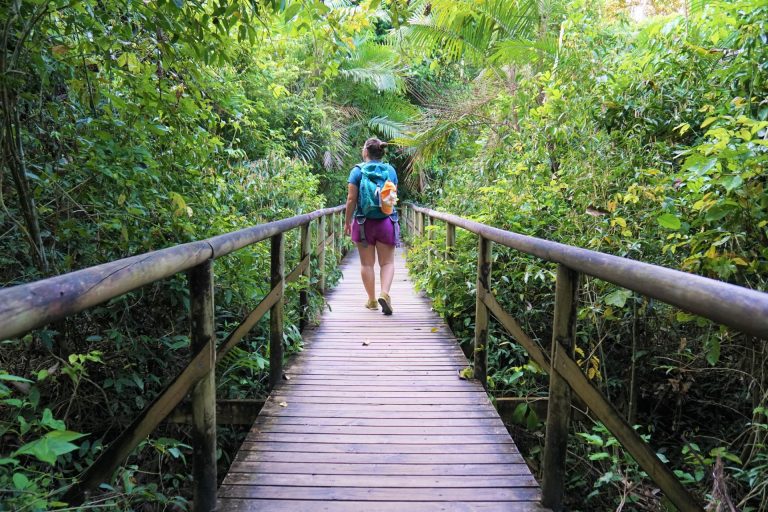
Imagine threading through lush rainforests, feeling the cool mist from hidden waterfalls on your face, listening to the distant call of exotic birds, and savoring breathtaking vistas of majestic volcanoes and national parks.
In this blog post, we’ll embark on a journey to uncover the best hiking trails Costa Rica offers, tailor-made for adventurous travelers like you. So, lace up your hiking boots and get your backpack ready; an exhilarating adventure awaits!
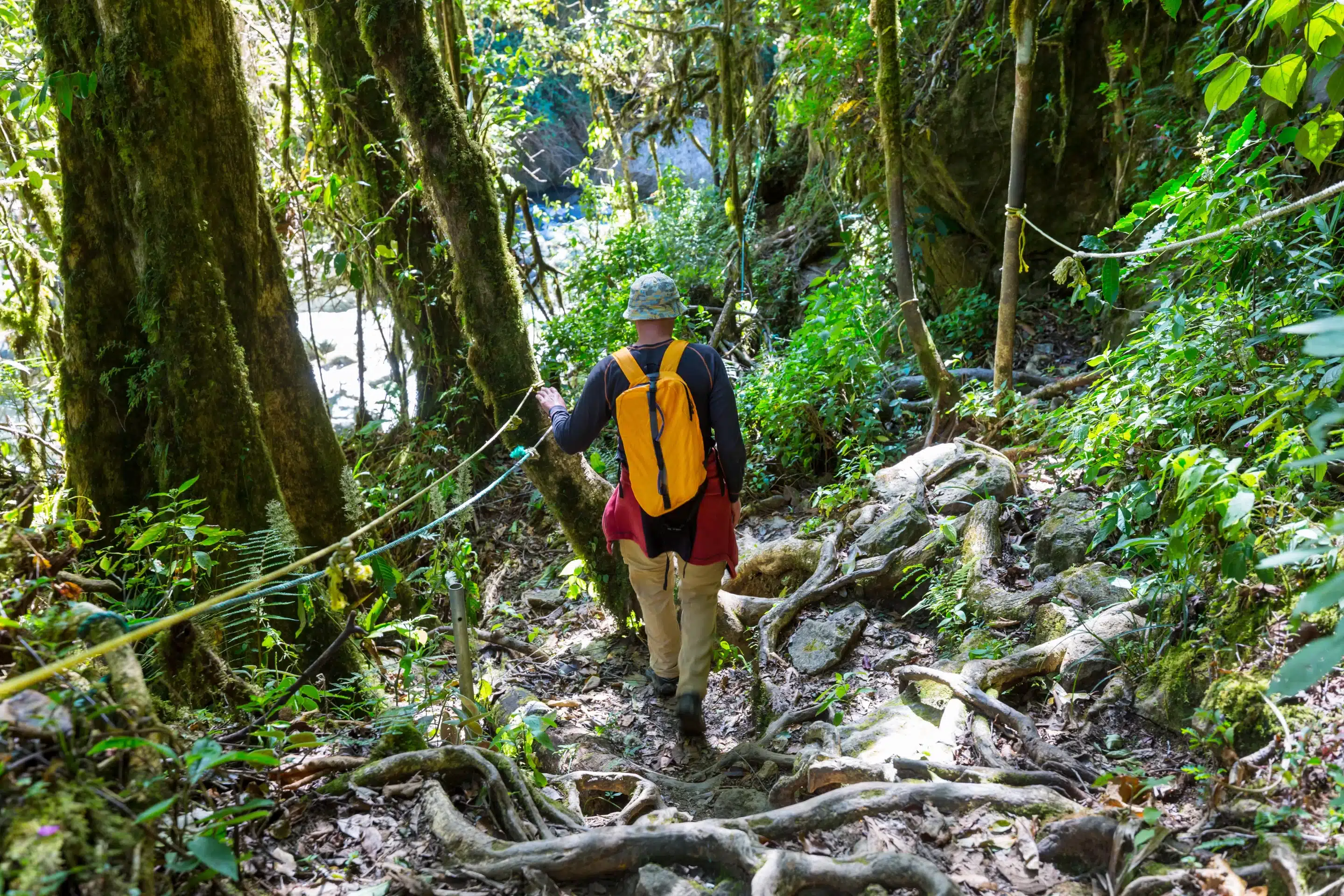
Does Costa Rica Have Good Hiking Spots?
Costa Rica isn’t just good for hiking—it’s a dream destination! Nestled between two oceans, this tropical haven boasts terrain that ranges from misty cloud forests and rumbling volcanoes to pristine beaches and dense jungles. Every trail tells a story; every turn reveals a new sight, and every step immerses you deeper into nature’s wonders.
Whether crossing suspended bridges over treetops in Monteverde or challenging yourself on the rugged paths of Corcovado National Park, Costa Rica ensures that your hiking experience is nothing short of spectacular.
Why is hiking popular in Costa Rica?
Hiking in Costa Rica is like opening the door to nature’s wonderland. One of the big reasons it’s so popular is the country’s incredible views of vibrant green treetops and waterfalls.
But it’s not just the landscapes that draw people in. Seeing wildlife up close, like mischievous monkeys or the flash of bright colors of toucans, is a massive draw. It’s like being in the middle of a live nature documentary, where every step can introduce you to a new animal or bird.
And let’s not forget about the variety! Costa Rica might be a small country, but it’s bursting with different places to explore. One day, you could be hiking along sandy beaches on the central Pacific Coast, feeling the ocean breeze. The next day, you might be in a cool cloud forest with mist wrapping around you or taking a relaxing bath in natural hot springs.
The Best Hiking Destinations in Costa Rica
Hiking’s been catching on big time, and it’s easy to see why! Who doesn’t love a good walk with a fantastic view at the end? If you’re thinking of hiking or are already a fan, Costa Rica has some great spots waiting for you.
Let’s go over some of the best hiking destinations in Costa Rica:
Corcovado National Park
Known as the “most biologically intense place on Earth,” this park lets you wander through untamed rainforests. Here are a few compelling reasons why someone should consider hiking in this stunning and biodiverse park:
- Breathtaking biodiversity: Corcovado National Park is renowned for its incredible biodiversity, making it one of the most biologically intense places on Earth.
- Pristine wilderness: Corcovado remains relatively untouched by human development, offering a rare opportunity to experience unspoiled nature.
- Unique flora: The park is home to various plant species, including towering trees, vibrant orchids, and unique ferns.
- Challenging trails: Corcovado National Park offers a range of hiking trails suitable for different skill levels.
- Conservation and education: Visiting Corcovado National Park contributes to its conservation efforts.
Overall, hiking in Corcovado National Park is an unforgettable experience that allows individuals to connect with nature, witness extraordinary wildlife, and contribute to the protection of one of the planet’s most valuable ecosystems.
Arenal Volcano National Park
Feel the thrill as you tread close to one of the most active volcanoes in the world by taking an Arenal Volcano hike. The view from the top is awe-inspiring, offering panoramic views of the surrounding lush landscape and the serene Lake Arenal.
These are more reasons why you should visit the Arenal Volcano:
- Active volcano: Home to the most active volcano in Costa Rica.
- Diverse ecosystem: It lies within a conservation area protecting multiple life zones.
- Bird watching: Habitat for 850 bird species, including the endangered resplendent quetzal.
- Rich flora and fauna: It houses diverse plant and animal species, from orchids to jaguars.
- Cultural significance: It contains historical sites, a museum, and hot springs.
Monteverde Cloud Forest Reserve
Step into a fantasy world! The hanging bridges and canopies here will make you feel as if you’re walking amidst the clouds. The dense mist and the calls of resplendent quetzals add to the mystical ambiance.
Let’s review a few of the reasons why visiting Monteverde is a must:
- Vast cloud forest: Over 10,500 hectares, mostly virgin forest.
- Rich biodiversity: Home to thousands of plant, mammal, and bird species, including the resplendent quetzal.
- Conservation legacy: Established in 1972 with a deep-rooted conservation history.
- Unique flora: It houses the world’s largest number of orchids.
- Visitor facilities: It offers trails, zip lines, and diverse eco-activities.
Monteverde offers a unique blend of nature and adventure in a pristine cloud forest setting.
Manuel Antonio National Park
Combine beach and jungle in one epic hike! White-faced capuchin monkeys swing above as you wander through dense forests leading to pristine beaches where turquoise waves crash against golden sands.
- Stunning beaches: The park boasts four beautiful beaches: Manuel Antonio, Espadilla Sur, Tesoro, and Playita.
- Diverse wildlife: Despite its small size, the park is home to 109 species of mammals and 184 species of birds, including sloths, monkeys, and the resplendent quetzal.
- Scenic beauty: The park features awe-inspiring beaches, lush tropical forests, and impressive landscapes with coves and mountains.
- Recreational activities: It offers opportunities for snorkeling, scuba diving, sea kayaking, mountain biking, and hiking.
- Global recognition: In 2011, Forbes listed it among the world’s 12 most beautiful national parks.
Manuel Antonio offers a blend of pristine beaches, rich biodiversity, and adventure in a tropical paradise setting.
Santa Rosa National Park
A historical and ecological gem, Santa Rosa is home to Central America’s most crucial dry forest habitats. It played a pivotal role in Costa Rican history and is now a testament to conservation success stories, with previously extinct species returning.
- Historical significance: The park protects the site of the Battle of Santa Rosa, a pivotal moment in Costa Rican history, against the forces of filibuster William Walker.
- Diverse habitats: The park encompasses ten unique natural habitats, including savannas, deciduous forests, marshlands, and mangrove woodlands.
- Rich biodiversity: Home to around 250 bird species and 115 mammal species, including Geoffroy’s spider monkey, mantled howler, and Panamanian white-faced capuchin.
- Protected ecosystems: As part of the Area de Conservación Guanacaste World Heritage Site, the park plays a crucial role in conserving the region’s biodiversity.
- Scenic beauty: With its vast landscapes, the park offers a blend of tropical dry forests, pristine beaches, and historical landmarks.
Santa Rosa National Park combines natural beauty with historical significance, making it a unique destination in Costa Rica.
Tenorio Volcano National Park
Tenorio Volcano National Park is a testament to the country’s rich natural beauty and diverse landscapes. A haven for hiking enthusiasts, the park offers a range of trails that meander through various habitats, including lush rainforests, cloud forests, and wetlands.
- Stunning natural phenomenon: The park is renowned for the Rio Celeste, which appears blue due to the emission of sulfur from the volcano and the precipitation of calcium carbonate.
- Diverse habitats: The park encompasses various habitats, including rainforests, cloud forests, and wetlands.
- Rich biodiversity: Home to various wildlife, including the tapir, puma, and the unique Tapir Valley tree frog (Tlalocohyla celeste).
- Volcanic features: Beyond the Rio Celeste, the park offers thermal springs, geysers, and panoramic views of the Tenorio Volcano.
- Historical and cultural significance: The park protects the region’s natural environment and commemorates the area’s history and culture.
La Fortuna Waterfall
Nestled near the Arenal Volcano, this 70-meter-high waterfall is a jewel of nature. The trail offers a mix of forested pathways and steps, culminating in the refreshing pool at the waterfall’s base. It’s the perfect spot for a refreshing dip after a rewarding hike.
- Majestic beauty: The waterfall is renowned for its impressive height and powerful cascade, making it a visual spectacle.
- Swimming opportunity: Visitors can take a refreshing dip in the large pool at the waterfall’s base, provided the current isn’t too strong.
- Accessible adventure: The waterfall is accessible through a Visitors’ Center, and while there are about 500 sturdy concrete steps leading to it, the journey offers a blend of exercise and scenic beauty.
- Natural surroundings: The area around the waterfall is lush and offers a glimpse of Costa Rica’s rich biodiversity.
- Popular attraction: Despite its popularity, an early visit can provide a serene experience, especially during the high season.
La Fortuna Waterfall blends natural beauty and adventure, making it a must-visit spot in the region.
Rio Celeste Waterfall
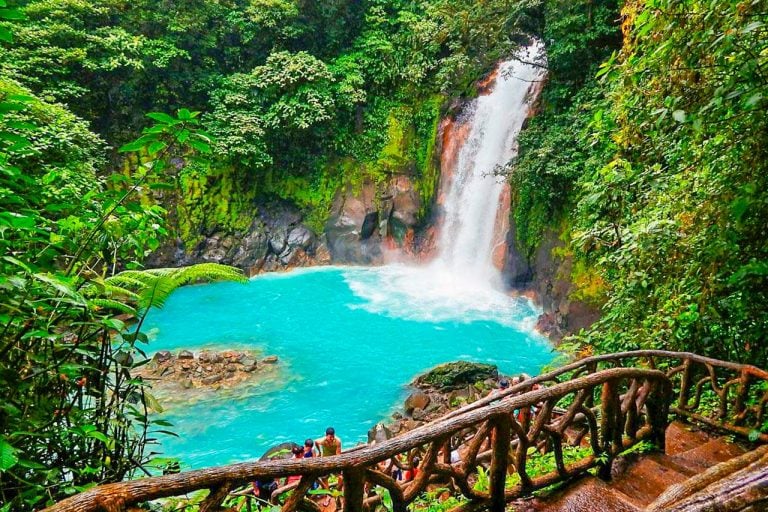
Tucked within the Tenorio Volcano National Park, the Rio Celeste is renowned for its mesmerizing turquoise waters. The legend says the gods washed their brushes in this river while painting the sky. The Rio Celeste waterfall hike offers diverse terrain, passing hot springs and topping out at the stunning Rio Celeste waterfall.
- Stunning natural beauty: Rio Celeste waterfall is one of the most breathtaking natural wonders in Costa Rica, characterized by its vibrant turquoise blue waters.
- Chemical marvel: The distinctive turquoise coloration of the water results from a chemical reaction between volcanic minerals.
- Accessible adventure: To reach the waterfall, visitors need to hike for about 20 minutes from the entrance of Tenorio National Park, journeying through lush rainforests.
- Part of Tenorio Volcano National Park: The waterfall is located within this park, which offers many other attractions, including the Rio Celeste River, natural hot springs, and diverse flora and fauna.
- Cultural significance: Local legends attribute the river’s unique blue color to stories of gods painting the sky or magical mermaid lagoons, adding to the mystical aura of the location.
Rio Celeste Waterfall, with its ethereal beauty and intriguing origins, is a must-visit spot for nature enthusiasts and those seeking a unique Costa Rican experience.
Discover the Heartbeat of Costa Rica
Costa Rica’s trails have a story to tell, and every hiker gets to write their own chapter. If you dream of becoming part of this tale, there’s no better companion than Find My Costa Rica.
Let us introduce you to Costa Rica’s hidden gems and well-trodden paths.
Hikes in Costa Rica are calling—are you ready to answer? Contact Find My Costa Rica, and let’s begin your hiking journey today and create stories worth telling.

FAQ
- How do I prepare for hiking in Costa Rica?
Start by packing lightweight, moisture-wicking clothes to stay cool in the tropical climate. Don’t forget a sturdy pair of hiking shoes and a rain jacket, because sudden showers are common. Protect yourself from the sun with a hat and sunscreen, and always carry plenty of water to stay hydrated.
Lastly, pack some insect repellent to ward off those pesky bugs. With these essentials, you’ll be all set to enjoy the rich landscapes and stunning views Costa Rica offers.
- Do I really need hiking boots for Costa Rica?
Absolutely! The terrain can be tricky, from muddy rainforests to rocky volcanic paths. Hiking boots give your feet the proper support and grip they need, helping you confidently tackle several trails. Plus, they offer protection against unexpected slips, wet conditions, or even the occasional curious critter.