What is ‘Gallo Pinto,’ Costa Rica’s Beloved Dish?

If you’ve ever strolled through the bustling markets of San José or savored breakfast in a tranquil Costa Rican beach town, you’ve likely encountered this delightful dish. But have you ever wondered where these Costa Rican rice and beans originated?

How did this simple yet tantalizing mix of rice and beans become the heart and soul of Costa Rican cuisine? Let’s dive into its colorful origins and explore its recipe!
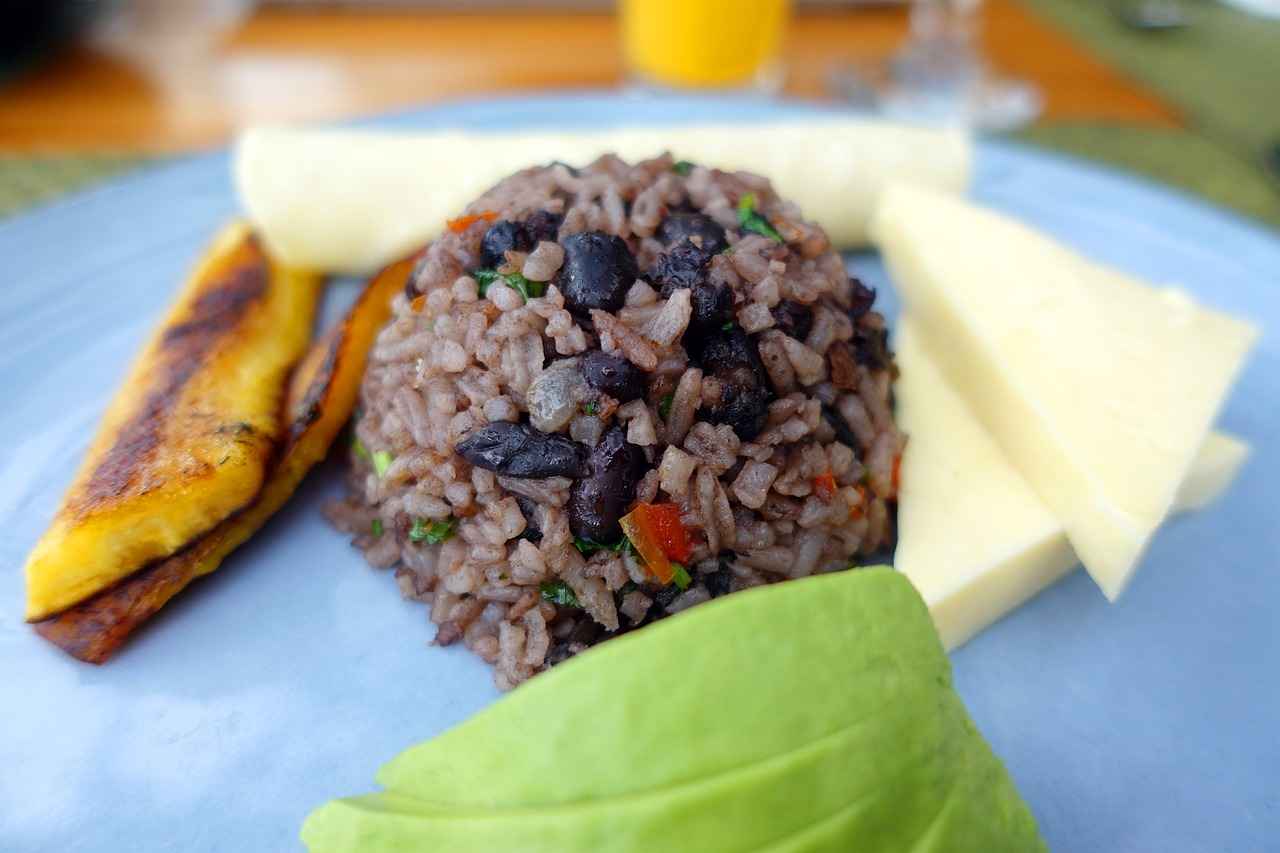
Ready to taste the Costa Rican gallo pinto recipe?

The Origins of Gallo Pinto, Costa Rica

The true origin of Gallo Pinto is as speckled as the dish itself. While its roots are undoubtedly in Central America, Costa Rica and its neighbor, Nicaragua, lovingly claim it as their own. The age-old debate rages on, with both nations sharing tales of its birth within their borders.

However, irrespective of where it truly began, the fact remains that Gallo Pinto is deeply woven into the fabric of Costa Rican culture.

Some historians believe that Gallo Pinto traces its lineage back to when enslaved Africans were brought to the Spanish colonies. They point to the African tradition of mixing grains with available ingredients, a culinary practice that might have beautifully blended with Spanish and indigenous recipes.

Others argue that the dish has indigenous roots, evolving from the rich agricultural traditions of Central America.

But here’s the golden nugget of truth: while its origins might be debated, the universal love for Gallo Pinto isn’t. The dish’s beauty lies in its simplicity and adaptability.


What does gallo pinto mean in Costa Rica?

At first glance, the name “Gallo Pinto” might seem a bit puzzling. Directly translated, it means “spotted rooster” in English. You’d be forgiven for wondering what roosters have to do with rice and beans.

Ticos refer to Gallo Pinto or Pinto as a combination of rice and beans cooked with Lizano sauce, coriander, and sweet pepper, among other ingredients.

The name captures the dish’s essence: the dark beans’ speckled, almost “spotted” appearance against the white rice grains. It visually resembles the contrasting colors of a spotted rooster, a familiar sight in the Costa Rican countryside.

It is called Gallo Pinto because when the beans and rice come together, the rice acquires the color of the beans, and the mixture becomes multicolored. Usually, Costa Ricans use black beans, but the dish has variations, and many prefer red beans.


Gallo Pinto Recipe

This rice and bean dish is comfort food, Costa Rican style! Here’s how to whip up the authentic gallo pinto step by step:


Ingredients:

  • 2 cups of cooked white rice (leftover rice from last night’s dinner works wonders!)
  • 1 cup of cooked black beans with some of its liquid (you might replace it with canned beans)
  • 1 medium onion, finely chopped
  • 1 red bell pepper (any color will do!), chopped
  • 2-3 cloves of garlic, minced
  • 2 tablespoons of vegetable oil (or any cooking oil you have on hand)
  • 1-2 teaspoons of Costa Rican salsa, Lizano. Don’t fret if you don’t have it. Worcestershire sauce or soy sauce can be handy substitutes, although the taste will differ slightly.
  • Salt and pepper to taste
  • Optional: fresh chopped cilantro for an herbal twist and garnish!


Let’s Get Cooking!

  • Saute away: Heat the oil in a large pan or skillet over medium heat. Add the chopped onion, bell pepper, and minced garlic. Saute these goodies until they’re soft and fragrant, roughly 3-4 minutes.
  • Bean there, done that: Stir in the black beans. Don’t forget a bit of the bean liquid – it’s the secret to getting that rich, authentic flavor! Mix everything well and let it simmer for about 2 minutes.
  • Rice to the occasion: Gently fold in your cooked rice. Stir everything, ensuring the beans and sautéed veggies are evenly distributed. You want every bite to be a mini flavor explosion!
  • Saucy secrets: Drizzle in the salsa Lizano (or your substitute). This magical potion will tie all the flavors together.
  • Season and stir: Sprinkle in salt and pepper according to your taste buds. Give everything a good mix, and let it cook for another 3-5 minutes until it’s all heated.
  • Garnish & serve: If you’re using fresh cilantro, sprinkle some on top. Serve your Gallo Pinto hot, and enjoy! Pair it with a fried egg, sour cream, or fried plantains for a fuller meal. You can also add your preferred hot sauce for a more complex flavor.

And voila! You’re ready to eat gallo pinto. ¡Buen provecho!


Salsa Lizano, the essence of Gallo pinto, Costa Rican style

Traditional Gallo Pinto is always cooked with Lizano sauce, making this dish a Costa Rican one. There is a saying in Costa Rica that says: “Donde hay salsa Lizano, hay un Tico.” This translates to “Where there is Lizano sauce, there is a Tico.”

The Lizano sauce, also called Salsa Inglesa (it’s a kind of Worcestershire sauce), is the pride and culinary joy of Costa Rica. For almost 90 years, Lizano sauce has been a staple on every table and in every home. It has also captured the taste buds of travelers from around the world.


Variations

There are other variations of this dish. A similar dish is found in Panama and El Salvador, where it is called Casamiento (Wedding). It is also known as Moros y Cristianos (“Moors and Christians”) or just Moro in Spain and Cuba. But, regarding the true nature of Gallo Pinto, it is believed that it came to be known through the Afro-Latino immigrants who live on the Caribbean Coasts. In Costa Rica’s Limón Province, the dish is prepared with coconut and is called “rice and beans.”

Gallo Pinto: A Taste of Costa Rica in Every Bite!

Ready to whisk your taste buds away on a Costa Rican adventure without leaving your kitchen? Say “¡Hola!” to Gallo Pinto, the sunrise staple of this tropical paradise.

Let the passionate team at Find My Costa Rica guide you. Discover secret local spots, indulge in authentic culinary experiences, and let Gallo Pinto be the beginning of your Costa Rican journey.

Embark on your Costa Rican adventure and let your taste buds lead the way! Book your trip now with Find My Costa Rica!
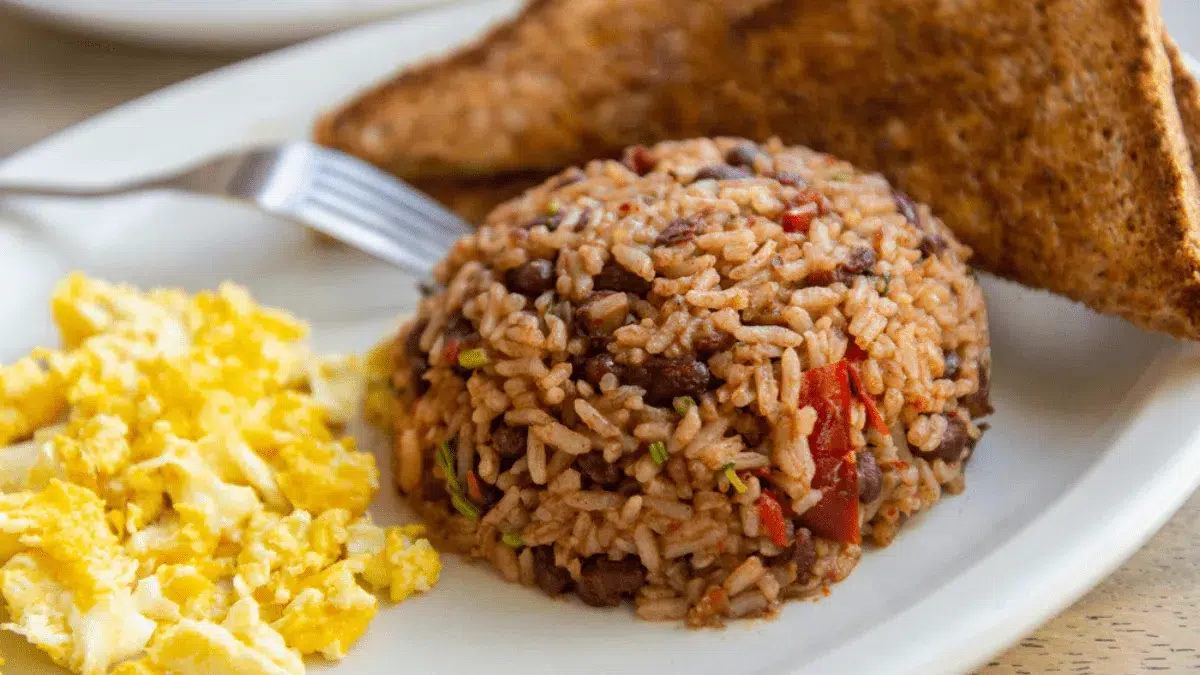
Scrambled eggs and sour cream are the perfect complement to gallo pinto.

FAQ

  1. Is Gallo Pinto eaten at a specific time of day?

Gallo Pinto is a sunrise superstar, often enjoyed as a hearty breakfast. But its charm isn’t confined to mornings; you’ll spot it at lunch or dinner tables too!

  1. Is Gallo Pinto vegetarian/vegan-friendly?

Absolutely! Gallo Pinto’s core ingredients are rice and beans, making it a vegan delight. Just double-check any added toppings or sides if you’re dining out.

  1. What’s the main difference between Costa Rican ‘Gallo Pinto’ and Nicaraguan ‘Gallo Pinto’?

Both are tasty, but they dance to different tunes! Costa Rica typically uses black beans, while Nicaragua often opts for red beans. Also, the seasoning and accompaniments might vary.

  1. Can I find ‘Gallo Pinto’ at all Costa Rican restaurants?

Oh, for sure! Gallo Pinto proudly graces menus across Costa Rica, from bustling city cafes to serene beachside shacks. It’s a national favorite!




The rainy season is genuinely wonderful for travelers who prepare for it. Crowds are smaller, forests are greener, and waterfalls are at their most dramatic. It rains hard, but usually in defined afternoon windows — mornings are often clear.

Want the full picture? Our guide to Costa Rica’s rainy season covers what to expect region by region.

What to pack by activity

Do not repeat your master checklist here these are the additions that matter for specific trip types. Grab what applies to your itinerary and leave the rest.

Beach and water sports

  • Rash guard sun protection in the water is more effective than sunscreen alone
  • Waterproof phone case or action cam housing
  • Reef-safe sunscreen mandatory in marine reserves; this is not a suggestion
  • Water shoes for rocky beaches and shallow reef walks

Hiking and national parks

  • Trekking poles especially useful on steep, wet trails in Corcovado or Chirripó
  • Gaiters for deep mud on rainy season trails
  • Extra headlamp batteries early morning wildlife walks start before dawn
  • Microfiber towel compact and dries fast between hikes

Wildlife watching

  • Binoculars note that most FMCR partner guides carry loaners, so check with your guide before packing yours
  • Zoom lens (200mm or more) for photographing birds and monkeys at distance
  • Early-morning layers wildlife is most active before 8am when temperatures are still low
  • Silent, dark-colored clothing neon colors startle wildlife

City and culture (San José and beyond)

  • Money belt or anti-theft bag  pickpocketing exists in busy market areas
  • Light cardigan or blazer for nicer restaurants
  • Comfortable walking shoes  cobblestones in Barrio Amón are tough on sandals
Traveler enjoying a Costa Rica sunset view from a scenic overlook

What NOT to pack for Costa Rica

This is the section most travelers wish they had read first. Overpacking is the number one complaint we hear from guests on their first day. Less really is more when you are moving between regions.

Jeans: They never fully dry in the humidity. Swap them for quick-dry pants or shorts and thank yourself on day two.

High heels or dress shoes: You will not need them. Even nice restaurants in Costa Rica are casual. One pair of clean trail sandals does the job.

Too many shoes: Three pairs maximum: waterproof sandals, trail shoes, and flip flops. Shoes are heavy and take space.

Non-reef-safe sunscreen: It is prohibited in several reserves and harmful to marine ecosystems. Bring reef-safe from home. Brands like Raw Elements and Badger are good options.

A hair dryer: Almost every hotel and lodge provides one. Leave yours at home.

Valuables you cannot afford to lose: Leave the expensive jewelry and the laptop you need for work. Use your trip as a proper break.

Cotton everything:Cotton absorbs moisture and stays wet all day. Pack synthetics or merino for everything except maybe one casual outfit.

Practical tips for packing smart: documents, money, and tech

Your passport must be valid for the full duration of your trip.

Customs also requires a tiquete de salida proof of onward travel out of Costa Rica. This can be a return flight or a bus ticket to a neighboring country. Have it printed or easily accessible on your phone. See Costa Rica national park regulations via SINAC for entry requirements at protected areas.

Money

  • Colones (CRC) are the local currency; USD is widely accepted but change is given in colones
  • ATMs are available in most towns withdraw colones there rather than exchanging at the airport, where rates are poor
  • Visa and Mastercard accepted at most hotels, restaurants, and tour operators; carry some cash for small sodas and local markets

Health prep

Check the CDC health recommendations for Costa Rica before your trip they cover vaccines, repellent, and food safety guidance. Travel insurance is not required by law, but we strongly recommend it for anyone doing adventure activities.

Tech

  • Costa Rica runs on 110V/60Hz US travelers need no adapter or converter
  • Cell coverage is solid in tourist areas; download offline maps before heading into remote zones
  • WhatsApp is the primary communication tool in Costa Rica make sure it is installed and working


Tropical hot springs surrounded by rainforest in Costa Rica
Do I need a visa to visit Costa Rica?

US, Canadian, and UK citizens do not need a visa to enter Costa Rica for stays up to 90 days. Your passport must be valid for the full duration of your trip. You will need to show a return or onward ticket at customs.

Is tap water safe to drink in Costa Rica?

Yes in most areas. Tap water in San José, Guanacaste, La Fortuna, and other major tourist regions is safe to drink and often tastes good. In very remote or rural communities, confirm locally before drinking. Carry a reusable bottle and refill with confidence in most places.

What is the best luggage for a Costa Rica trip?

A soft-sided rolling suitcase works well if you are staying in one or two places. If you are moving between regions beach, rainforest, and volcano a mid-size backpack (40–50L) is far more practical. It fits in small boats, shuttles, and keeps your hands free on trails. We see guests arrive with giant hard-shell suitcases and spend the trip wishing they had packed a bag.

Do I need to bring bug spray to Costa Rica?

Yes. We recommend a picaridin-based repellent like Sawyer 20% over DEET it works just as well in tropical conditions, does not damage gear or plastics, and has no harsh smell. Apply it especially at dawn and dusk during the rainy season.

You may also like

Costa Rica Packing List 2026: Everything You Need for Your Trip

Costa Rica Packing List 2026: Everything You Need for Your Trip

Here is a packing mistake almost every traveler makes on their first Costa Rica trip: they pack too many shoes. Or they forget reef-safe sunscreen which is not just a recommendation but a requirement in several national parks and marine reserves. Either way, they...

The Real Meaning of Costa Rica’s Iconic Phrase “Pura Vida”

The Real Meaning of Costa Rica’s Iconic Phrase “Pura Vida”

If you’ve ever interacted with a Tico (a native Costa Rican) or researched this tropical paradise, you’ve undoubtedly come across two words: “Pura Vida.” But what is the real Pura Vida meaning? Is it just a slogan, or something deeper? What Does Pura Vida Mean? (The...

Costa Rica Travel Guide for First-Time Visitors (2026)

Costa Rica Travel Guide for First-Time Visitors (2026)

Planning your first trip to Costa Rica can feel overwhelming. With rainforests, volcanoes, and two different coasts to explore, the "Pura Vida" dream can quickly turn into a logistical puzzle. Many travelers ask: Do I really need a travel agent? Can I just rent a...

Shopping cart0
There are no products in the cart!
Continue shopping
0