If you’re planning a trip to Monteverde, then the Monteverde and Santa Elena Cloud Forest Reserves are must-visit destinations that should be at the top of your bucket list. Each reserve has its own distinct charm, offering a unique experience you wouldn’t want to miss.
Getting to Know Monteverde and Santa Elena Cloud Forests
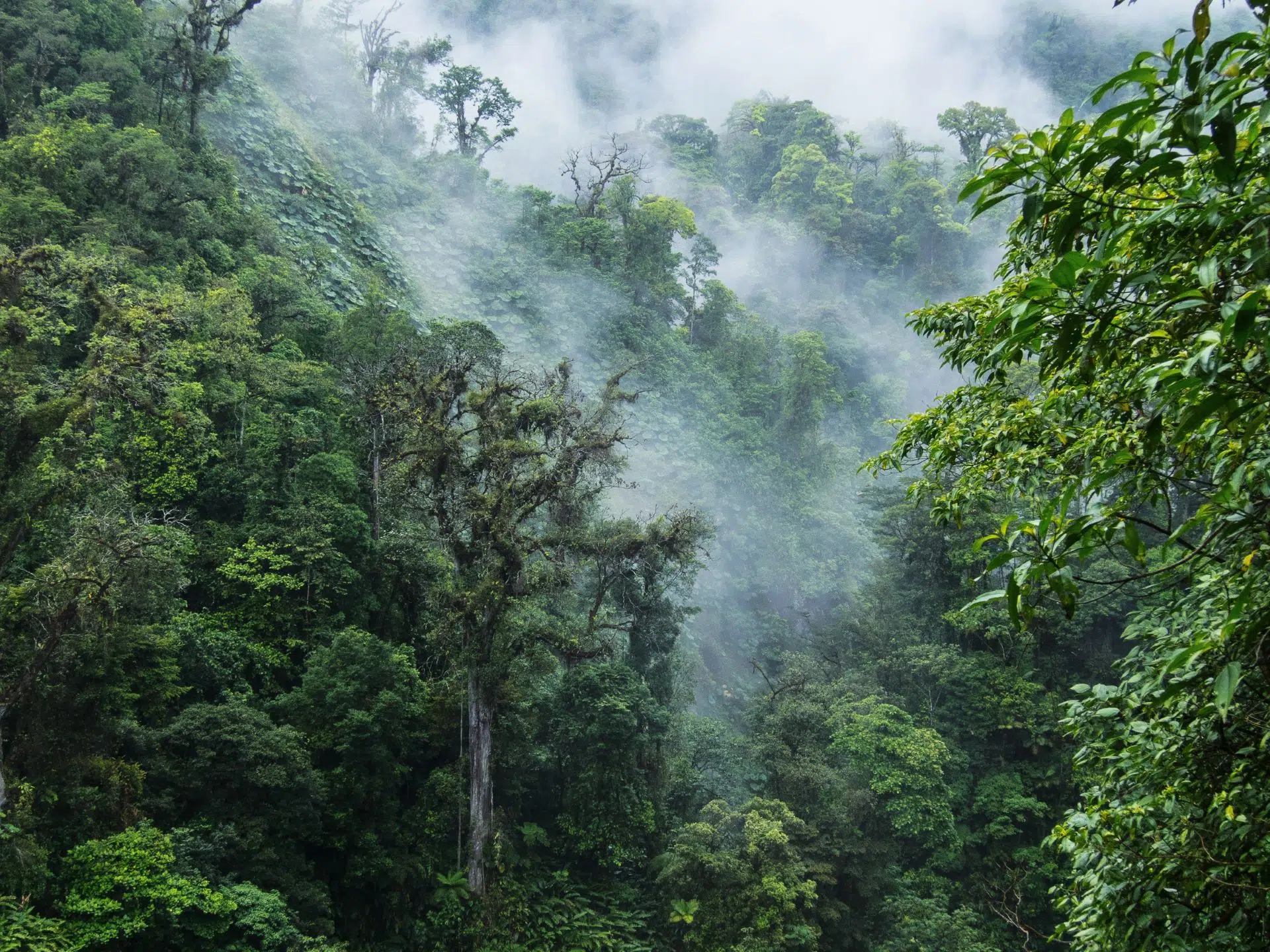
If you’re still wondering why you should go to Monteverde, the short answer is the cloud forests. Let’s start with the fact that Monteverde is situated on the Tilaran Mountain Range, which allows for high altitude and generous rainfall. These unique conditions create a habitat that supports various plant and animal life.
The Monteverde Cloud Forest Biological Reserve, along with its sister reserve, Santa Elena Cloud Forest Reserve, serves as a sanctuary for numerous species, including jaguars, ocelots, tapirs, and the elusive resplendent quetzal. These reserves, established with a commitment to sustainability, are a testament to the ongoing conservation efforts in Costa Rica.
Besides offering breathtaking landscapes and rich biodiversity, these awe-inspiring locations also serve as a model for responsible tourism and environmental education.
Let’s take a closer look at what makes these forests unique and why they’re worth including in your Costa Rican adventure.
What is the Monteverde Cloud Forest Reserve known for?
The Monteverde Cloud Forest Reserve is renowned for its diverse ecosystems and impressive biodiversity. Its variable climate and substantial altitudinal gradient contribute to a rich array of creatures, including iconic species such as jaguars, ocelots, Baird’s tapirs, three-wattled bellbirds, bare-necked umbrellabird, and the resplendent quetzal.
Furthermore, this reserve spans over 10,500 hectares, making it a testament to Costa Rica’s commitment to sustainability, exemplified through its history with the arrival of Quakers from the United States in the early 1950s and the ongoing reforestation efforts.
When you come here, you can explore the reserve through well-maintained trails and book guided tours in English or Spanish.
Santa Elena Cloud Forest Reserve
Established as a community-administered reserve in 1992, this reserve exemplifies the community’s commitment to conservation and sustainable tourism, contributing to environmental preservation and local development.
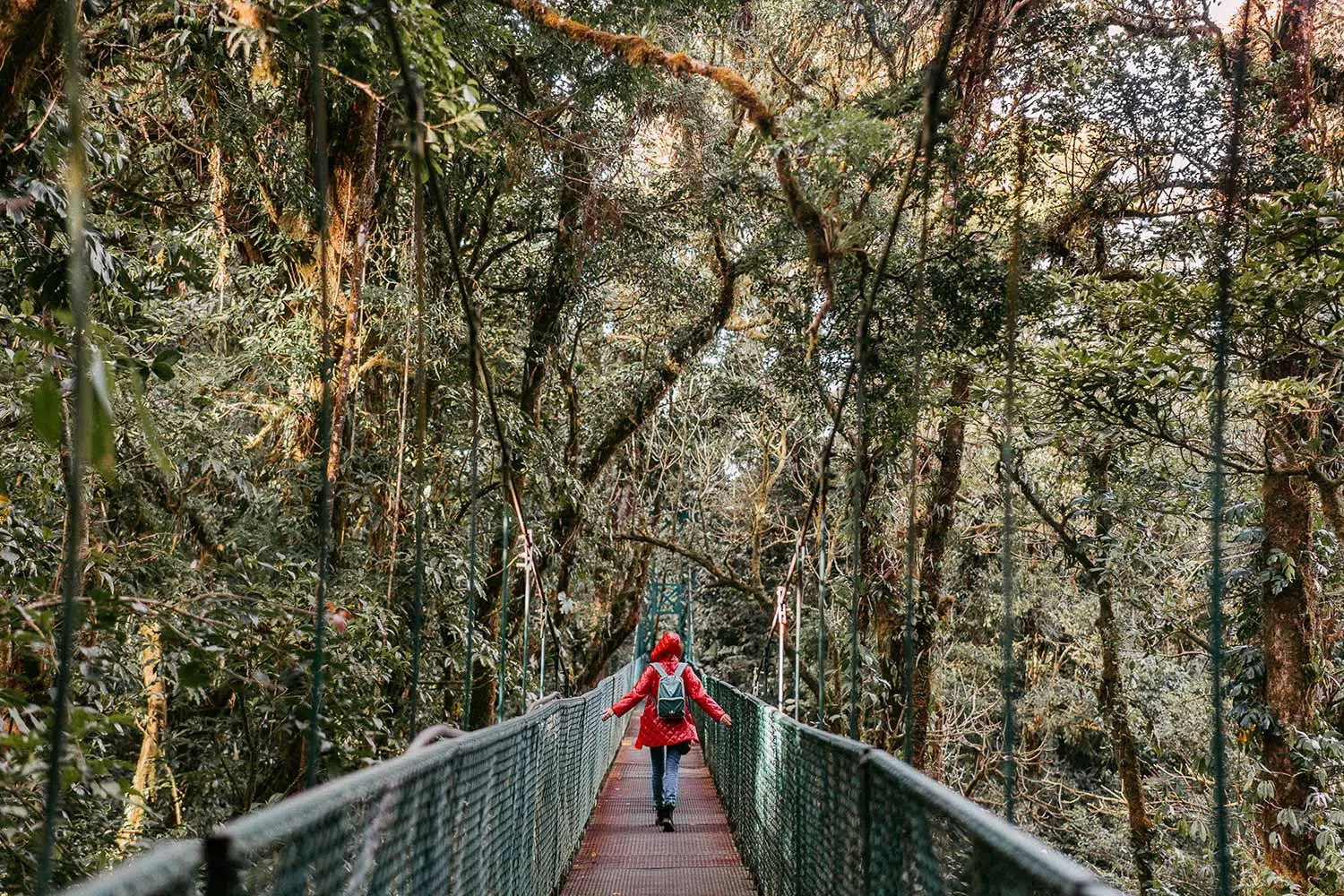
It’s also located in the town of Santa Elena, offering a tranquil alternative to the more popular Monteverde. One aspect that makes this place stand out is its lush garden of mosses, ferns, and epiphytes thriving on every tree.
The persistent canopy-level cloud cover creates a moist environment and fosters incredible biodiversity. As a result, Santa Elena Cloud Forest Reserve is a haven for diverse plant life and a habitat for numerous birds, insects, mammals, reptiles, and other species like the three-wattled bellbird, resplendent quetzal, and jaguars.
Planning Your Trip
These are some aspects to consider before planning your next trip to these spots:
Where to stay
Choosing accommodation for your visit is essential for a comfortable stay. Fortunately, both areas offer various options based on your preferences and budget.
In Monteverde, you can find eco-friendly lodges, hotels, cozy guesthouses, and budget-friendly hostels. On the other hand, Santa Elena town has family-run bed and breakfasts and budget-friendly hostels.
Read our blog for a list of recommended accommodations, ranging in price from low to high.
How to get around
If heading to Monteverde Cloud Forest Reserve, take a departing bus from Banco Nacional in Santa Elena at 6:15 am, 7:20 am, and 1:15 pm. To take a bus for your return, you can leave the reserve at 11:30 am, 2:00 pm, or 4:00 pm. The cost for both is $1 each way. Alternatively, you can find taxis available for up to five passengers for around $10 each way.
In Santa Elena, local buses provide a convenient and cost-effective option to reach the reserve. Operating at regular intervals from 6:30 am to 12:30 pm and returning from 9 am to 4 pm, these buses cost $3 per person. We recommend making reservations through your accommodation in advance.
If you’re driving to Santa Elena Cloud Forest Reserve, please note that the road is navigable, though not entirely paved. It’s a straightforward route northeast, passing attractions like Sky Adventures and Selvatura Park.
For a smoother journey, especially outside the town center, you can rent a tall car if you’re visiting in the dry season or a 4×4 if you’re going in the rainy season. The drive takes approximately 20 minutes, and the reserve offers free parking.
Once you’re in Santa Elena, consider that taxis offer flexibility for reaching the forest. Coordinating with a taxi driver in advance and obtaining their contact information for return rides is recommended.
What to pack
When preparing for your adventure, pack essentials such as hiking boots, a raincoat, long hiking pants, a light jacket or sweater, moisture-wicking shirts, a waterproof bag, insect repellent, and sunscreen. Don’t forget your camera, hat, water bottle, and snacks to stay energized during your exploration.
Things to Do in Monteverde and Santa Elena Cloud Forests
Here are some things to do during your visit to these beautiful reserves:
What to do in Monteverde Cloud Forest Reserve
Hiking trails
Hike on the variety of well-maintained hiking trails that this reserve offers; some of them include Sendero Bosque Nuboso, El Camino, Sendero Pantanoso, Sendero El Río, Sendero Chomogo, Sendero George Powell, Sendero Brillante, and Sendero Roble. Book our 2.5-hour walk and hike this reserve along with a naturalist guide!
Birdwatching
Monteverde is a birdwatcher’s paradise, and the reserve is home to over 400 species of birds. Consider joining a guided birdwatching tour to increase your chances of spotting some species like the resplendent quetzal, bellbirds, and toucans.
Canopy tours and zip-lining
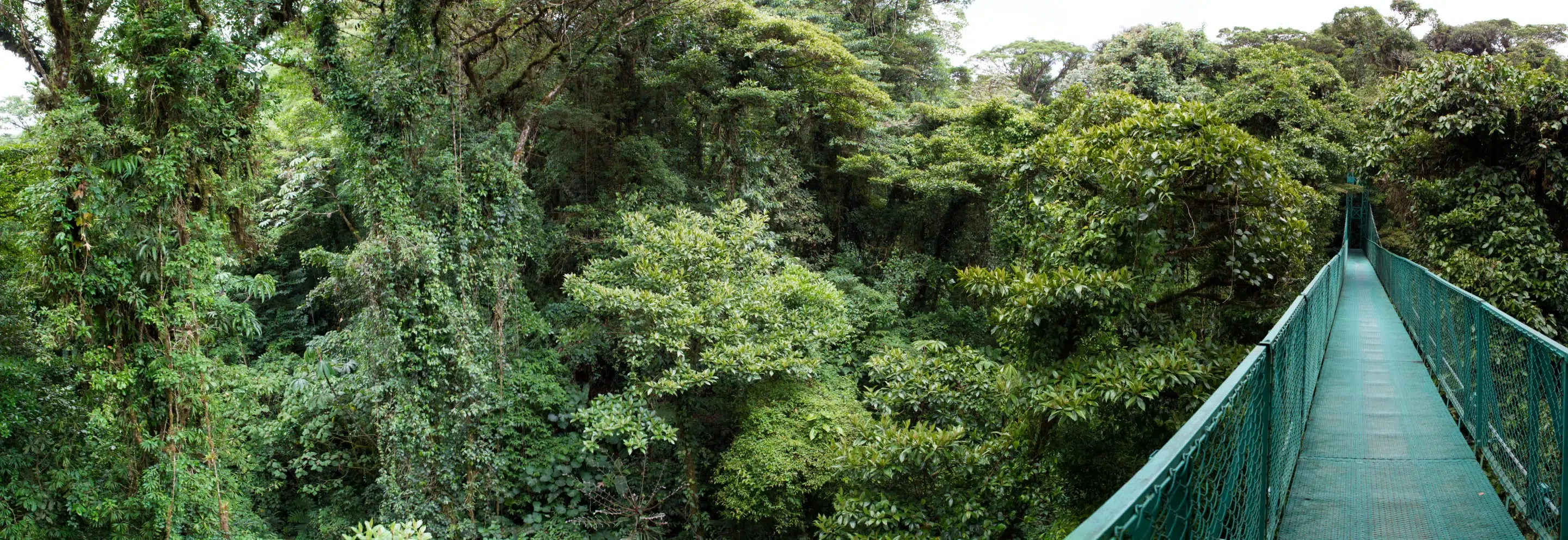
Experience the cloud forest from a different perspective by taking a canopy tour or zip-lining adventure. Book our 2.5-hour extreme canopy tour for an adventure-filled journey and get breathtaking views of the forest canopy.
Night tours
Explore the cloud forest after dark on a guided night tour. Witness the nocturnal wildlife activities, including frogs, insects, and other animals, with our 2-hour night walk in Monteverde Cloud Forest.
What to do in Santa Elena Cloud Forest Reserve
Hiking trails
Get a genuine connection with nature by hiking on this picturesque reserve’s rustic, less-manicured paths. There’s an extensive network of trails spanning 12 km (7.5 mi), so it’s an excellent opportunity for exploring! Our 2.5-hour walk in Santa Elena Cloud Forest Reserve can help you explore the trails and show you more about the area.
Night tours
Experience the cloud forest after dark with a guided tour that allows you to spot nocturnal wildlife, including frogs, insects, and potentially some elusive mammals.
Go to the Viewpoints
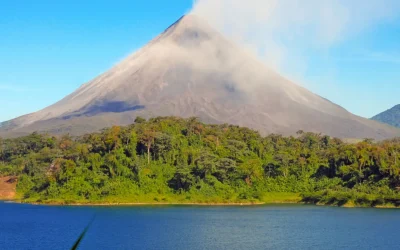
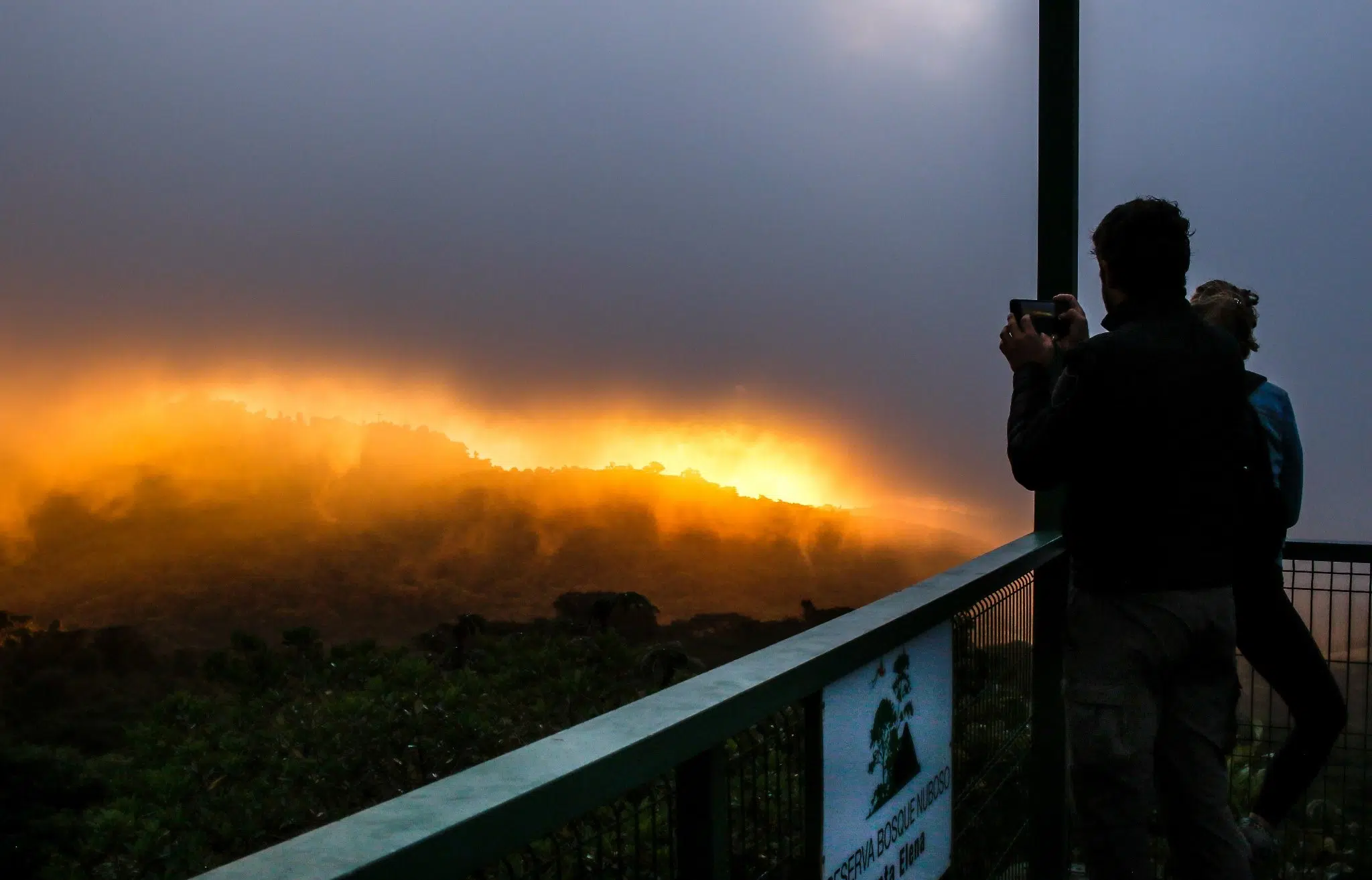
The reserve has three prominent viewpoints from which you can enjoy a stunning view of the Arenal Volcano. On a clear day, you can appreciate the Volcán Platanar, Cerro Congo, Lago de Nicaragua, Lago Arenal, Cerro Chato, Cerro Pelado, and other distant mountains and volcanic structures.
Visit the Orchid Garden
Explore the Orchid Garden, which is open from 7:00 am to 3:00 pm and included in the entrance fee. Discover diverse orchid species native to the reserve, including Pleurothallis, Lepanthes, Stellis, Dichaea, Oncidium, and Maxillaria, cultivated through a collaborative effort with volunteers, students, and staff.

How to Ensure a Sustainable Travel Experience
Monteverde is renowned for its commitment to ecotourism and sustainability. To ensure a truly responsible and positive visit to this destination, consider the following tips:
- Stay on designated trails to avoid disturbing natural habitats.
- Refrain from touching or feeding wildlife and plants.
- Carry a reusable water bottle.
- Avoid single-use plastics.
- Ensure you take all trash, including biodegradables, and dispose of it properly.
- Conserve water by taking shorter showers and reusing towels.
- Turn off lights, air conditioning, and electronics before leaving your accommodation.
- Participate in local guided tours.

Take Your Trip to the Next Level with Find My Costa Rica!
Exploring the Monteverde and Santa Elena Cloud Forest Reserves delivers an unforgettable journey into the heart of nature’s wonders.
To elevate your adventure and ensure a seamless, responsible visit, partner with Find My Costa Rica. Our expertise and dedication to preserving these natural gems will make your journey memorable.
Contact Find My Costa Rica to plan your visit and take your trip to the next level. Book your sustainable adventure now!
FAQs
1. Is Monteverde Cloud Forest worth visiting?
Yes, the Monteverde Cloud Forest is worth visiting, especially for nature enthusiasts, birdwatchers, and those looking for an immersive experience in a cloud forest.
2. Is Santa Elena Cloud Forest Reserve worth a visit?
Yes, Santa Elena Cloud Forest Reserve is worth a visit. This is a great spot for travelers interested in a quieter and less crowded alternative with equally breathtaking scenery and diverse flora and fauna.
3. How much does it cost to go to the Monteverde Cloud Forest?
The cost to go to the Monteverde Cloud Forest Reserve is the following:
- $25 for non-national adults
- $12 for non-national children
- $12 non-national students
Tip: There’s a $5 parking fee.
4. How much does it cost to go to the Santa Elena Reserve?
The cost to go to Santa Elena Cloud Forest Reserve is $18 for foreign adults and $7 for foreign children aged 7–12. Admission is free for children under 7 years old.
5. Do I need a tour to visit Monteverde or Santa Elena Cloud Forests?
No, you don’t need a tour to explore the Monteverde or Santa Elena Cloud Forests. You can pay your entrance fee and enjoy a self-guided walk on the trails.