
Planning a trip to Monteverde? You might be wondering how to get to the cloud forest, what the road conditions are, and the best way to get around the area. You’re in the right place.
At Find My Costa Rica, we’ve created this comprehensive travel guide to ease your navigation to this eco-friendly destination.
Keep reading to learn more about all the details you should consider for the best transportation option.

Is Monteverde Worth Visiting?
Yes! Monteverde is definitely worth visiting. This is an excellent destination to see breathtaking cloud forests, diverse wildlife, and eco-friendly attractions.
Additionally, it’s home to the Monteverde Cloud Forest Reserve and the Santa Elena Cloud Forest Reserve, two of the most bio-diverse reserves in the country and possibly worldwide.

What’s the Best Way to Get to Monteverde?
Monteverde is approximately a 3 hour and 44 minute drive from San José. The journey may seem short at 84.6 miles (136.2 km), but the hilly terrain extends the travel time to at least three and a half hours.
You can take a shuttle, a private transfer, or rent a car to reach this beautiful destination. However, the choice ultimately depends on your preferences, convenience, budget, and travel plans.
Let’s go over some of the most common transportation options to get there easily:
Lake crossing
If you’re traveling from La Fortuna/Nuevo Arenal, the taxi boat across Lake Arenal is a convenient option. The 3-hour journey costs approximately $45 per person, with two daily routes available at 8 am and 2 pm. This is a great option if you want to save time and enjoy scenic views.
Private transportation
This option ensures a smooth 3-hour journey from both San Jose and Liberia, with prices at around $230 for 1-4 people.
While it might be an expensive option, you ensure reliability, comfort, and the expertise of experienced drivers familiar with the challenging road conditions. This becomes particularly crucial during the rainy season, when the roads can be nearly impassable.
Shared shuttle
Priced between $55 and $68 per person for a one-way journey, the shared shuttles offer a reasonable balance between affordability and comfort.
The duration of the shared shuttle ride is approximately 4 hours. It operates with two daily schedules, one in the morning and one in the afternoon. These shuttles depart from the city and follow the main roads leading west to Puntarenas and then winding northeast to reach Monteverde.
Driving
If you’re considering a self-drive option, the drive is approximately 3.5 hours from San Jose via Sardinal Route 606 and a similar duration from Liberia through Las Juntas Route 145.
For Route 606, leading to downtown Santa Elena, sedans are suitable for the dry season. However, if your plans include exploring adventure parks and reserves or staying outside the main town, a high-clearance car or 4×4 is recommended, especially during the rainy season.
If you’re driving from Guanacaste via Route 145 (Las Juntas), the journey takes around 3.5 hours, featuring a mix of gravel and concrete roads. The road is narrow, curvy, and windy, passing through towns like Eco Museo, Candelaria, and Campos de Oro. This route also calls for a 4WD vehicle during the rainy season due to its varied conditions.
Note: Keep in mind that there is no car rental in Monteverde.
Public Bus
From San Jose:
Take the Transmonteverde bus from Terminals 7-10 in downtown San Jose for approximately $6 (2800 Costa Rican colones). This is the only direct bus option available, departing daily at 6:30 am and 2:30 pm with a travel time of around 4.5 hours.
From Liberia:
The route from Liberia involves multiple buses. Initially, you can take a bus from Liberia to Cañas, a 2-hour journey with departures every half an hour from 8:30 am to 3 pm.
After that, transfer to a bus from Cañas to Tilaran. Buses are available at 6 am, 7:30 am, 8:15 am, 9 am, 10:30 am, 12 pm, 1 pm, 1:50 pm, 2:35 pm, 3:15 pm, 4 pm, and 6 pm.
Finally, take a bus from Tilaran to Santa Elena downtown, with four daily departures at 4 am, 8:30 am, 12:30 pm, and 5 pm.
From Arenal/La Fortuna:
If you’re in Nuevo Arenal or La Fortuna, take the 3-hour bus to Tilaran. From Tilaran, continue your journey to Santa Elena. You can catch these buses departing at 8 am and 4:30 pm at the bus terminal located in front of Fortuna Park.

The Best Ways to Get Around Monteverde
Here are the best ways to explore the area:
Taxis
Taxi services are a convenient way to navigate the town’s hilly terrain. With 23 taxi cars operating from 5 am to 10 pm and four bases scattered throughout Monteverde, catching a taxi is accessible.
Taxi fares have fixed prices ranging from $5 to $20 per way, depending on the route and distance. We recommend agreeing on a fare before starting the journey.
Walking
The area is easily navigable on foot, with most amenities within a 5-kilometer radius. Walking is a common means of transportation in the area, especially for locals without vehicles. Keep in mind that the area is characterized by hilly terrain and steep climbs, so we recommend wearing comfortable hiking shoes.
Tours
An excellent way to explore Monteverde is by taking advantage of the available tour shuttles that conveniently transport you to various parks and attractions.

Top Places to Stay in Monteverde
These are some of the top accommodations, ranging from affordable to upscale:
- Cala Lodge
- Selina Monteverde
- Poco a Poco
- Monteverde Country Lodge
- Monteverde Lodge & Gardens
- Cloud Forest Lodge Monteverde
Do you want to explore more options? Consider reading our blog to see all of our recommended hotels.
Monteverde’s Must-Visit Activities
Make the most of your time while visiting by doing some of these activities:
- Explore the hiking trails of Monteverde or Santa Elena Cloud Forest Reserve.
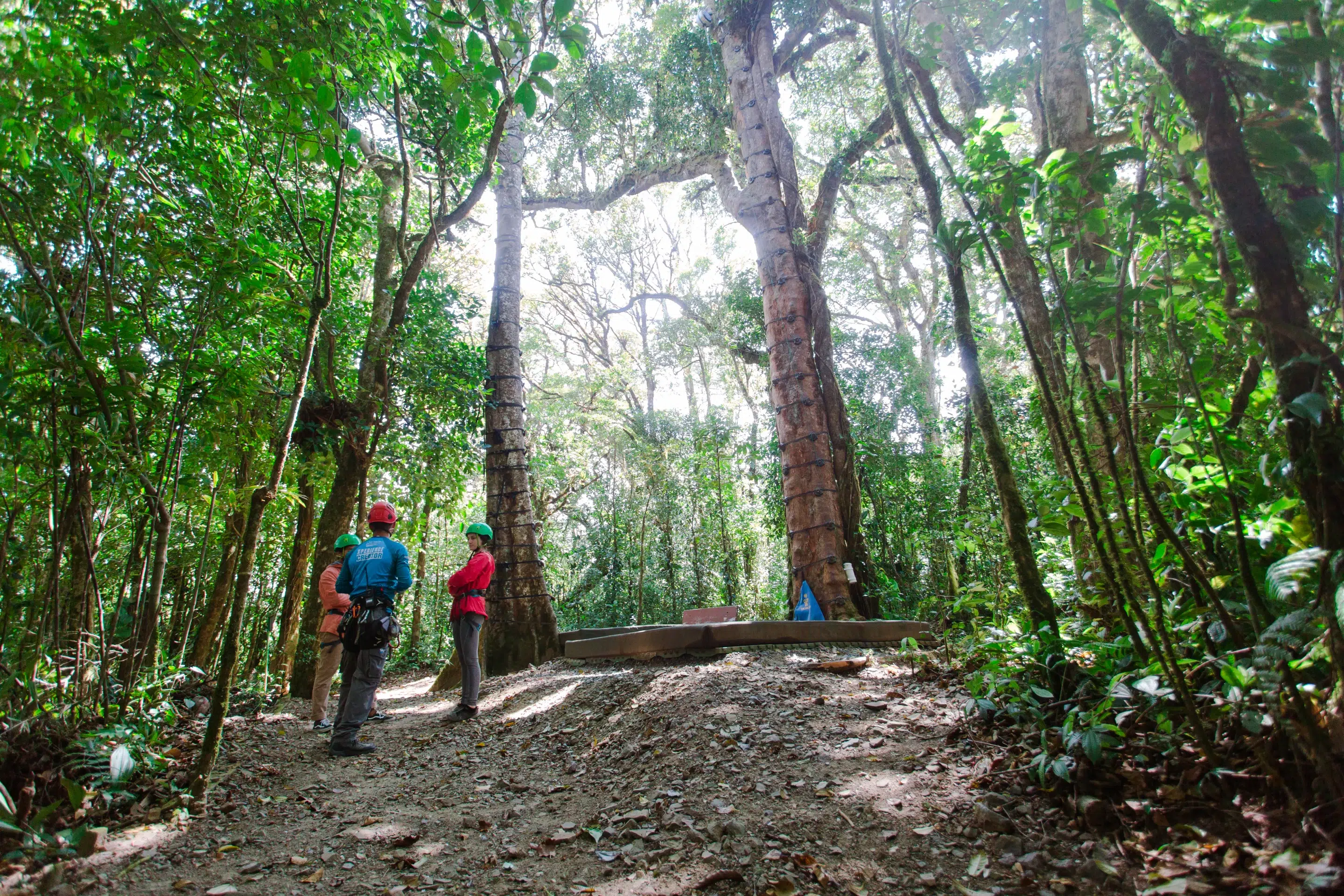
- Experience thrilling zip-lining at Sky Adventures Monteverde Park.
- Enjoy hanging bridges, zip-lining, and other activities at Selvatura Park.
- Book night walks through the misty cloud forest.
- Visit the Butterfly Garden.
- Go hiking and bird watching.
- Learn about the coffee and chocolate-making processes with guided tours.
Ready to Explore Monteverde? Let Find My Costa Rica Guide You!
A trip to Monteverde on your own can be daunting. Fortunately, our team at Find My Costa Rica can simplify the process by providing insights into transportation, road conditions, and exploring the cloud forest.
Contact Find My Costa Rica today to guide you on a hassle-free exploration of this eco-friendly destination. Plan your adventure now!
FAQs
1. How long does it take to get from San Jose to Monteverde, Costa Rica?
Getting from San Jose to Monteverde usually takes 3-5 hours, depending on your mode of transportation.
2. Is it hard to drive to Monteverde?
No, it’s not hard to drive to Monteverde. However, it can be challenging because the route includes winding, hilly roads.
3. Is Monteverde walkable?
Yes! Monteverde is walkable. Be aware that the area is hilly, and some walks may involve steep climbs. For this reason, packing comfortable walking shoes is a must.
4. Are there taxis in Monteverde, Costa Rica?
Yes, there are taxis in Monteverde. You can find them at the base or on the road, or you can request one through your accommodation.